
Description
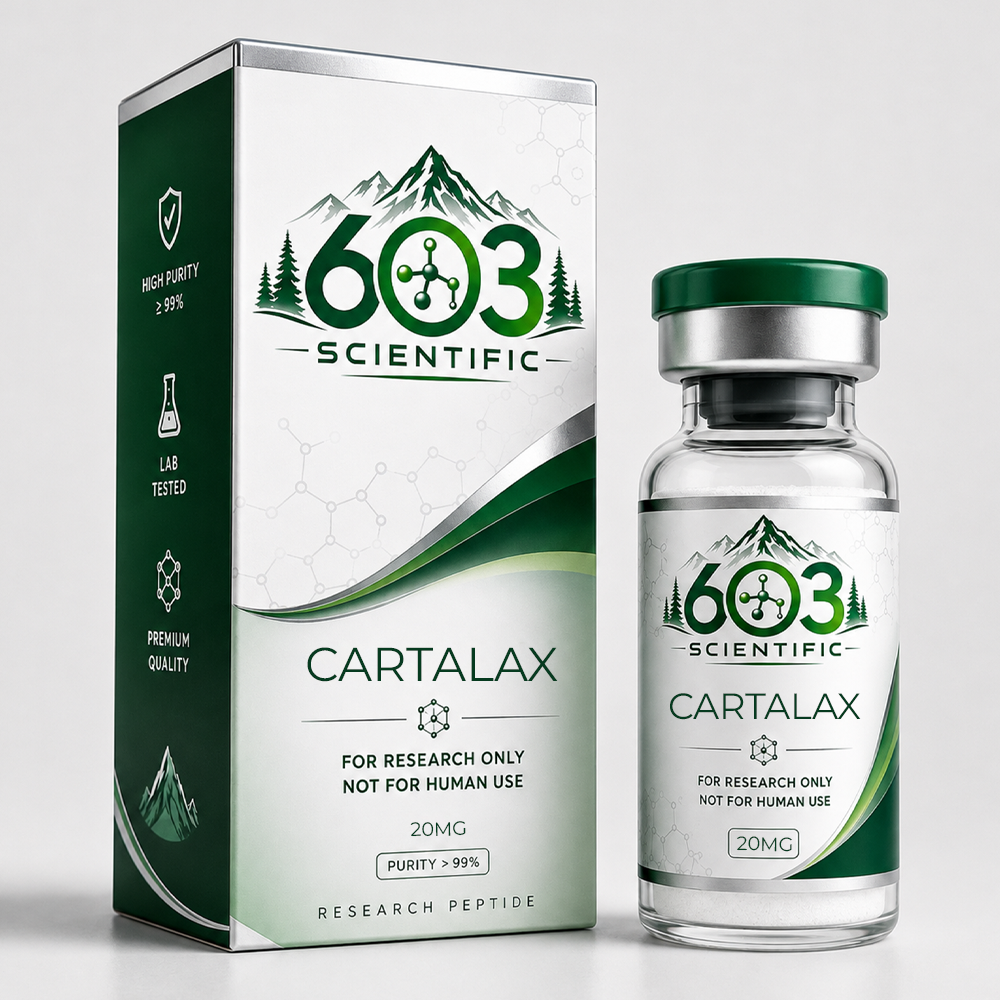
⭐ Cartalax – Synthetic Tetrapeptide Research Material (RUO)
Cartalax is a defined synthetic tetrapeptide consisting of the amino‑acid sequence Ala‑Glu‑Asp‑Leu (AEDL). Supplied in lyophilized form, Cartalax is intended exclusively for controlled laboratory research, analytical testing, and scientific investigation. Its clearly defined four‑amino‑acid sequence provides researchers with a characterized material suitable for peptide identity assessment, sequence verification, chromatographic comparison, and structured molecular research workflows requiring reproducible documentation and traceable experimental conditions.
Cartalax 20mg may be incorporated into a wide range of non‑clinical laboratory applications where consistent peptide identity, defined sequence information, and analytical transparency are essential. Researchers often utilize Cartalax in peptide characterization studies, sequence‑based analytical evaluations, comparative peptide investigations, molecular interaction research, cartilage‑associated in‑vitro models, chromatographic method development, analytical assay creation, stability assessments, and degradation analysis under controlled laboratory conditions.
Cartalax is prepared and documented under established quality procedures designed to support batch consistency, material identification, traceability, and research clarity. Batch‑specific analytical documentation may be available to support laboratory recordkeeping, identity verification, and structured experimental workflows.
Research Applications
Cartalax may be utilized in laboratory research activities including:
- Tetrapeptide identity and characterization studies
- Peptide sequence analysis and verification
- Comparative peptide investigations
- Molecular interaction studies
- Cartilage‑associated in‑vitro research models
- Chromatographic and analytical evaluation
- Analytical assay development and optimization
- Stability and degradation assessments
- Controlled in‑vitro laboratory research
Research applications may vary according to laboratory protocols, institutional requirements, analytical methods, experimental design, and individual study objectives.
Storage & Handling
To help maintain material integrity during laboratory use, Cartalax should be stored and handled under controlled environmental conditions designed to preserve peptide stability, support reproducible analytical behavior, and ensure consistent performance across multiple research workflows.
- Store lyophilized Cartalax at –20°C or according to the temperature listed in the accompanying product documentation. Long‑term frozen storage helps maintain structural integrity, reduces degradation risk, and supports batch‑to‑batch consistency during analytical evaluation.
- Protect the material from excessive heat, moisture, and direct light. Exposure to elevated temperatures or humidity may accelerate degradation, while prolonged light exposure can influence peptide stability, chromatographic behavior, and sequence‑based analytical outcomes.
- Following reconstitution or preparation for laboratory analysis, maintain storage conditions according to validated research protocols and buffer requirements. Prepared solutions may require refrigeration or frozen storage depending on solvent composition, pH, ionic strength, and experimental timelines. Researchers should follow institutional guidelines for short‑term and long‑term storage of peptide solutions.
- Avoid unnecessary or repeated freeze–thaw cycles, as temperature fluctuations may impact peptide integrity, alter chromatographic retention behavior, and reduce reproducibility across comparative studies. When possible, aliquot prepared solutions into smaller volumes to minimize repeated thawing.
- Handle the material using appropriate laboratory safety procedures and aseptic techniques. Proper technique helps prevent contamination, supports traceability, and ensures that analytical results remain consistent across multiple workflows. Use sterile tools, clean working surfaces, and validated preparation methods during reconstitution and sample handling.
- Record preparation dates, storage conditions, environmental exposures, and handling notes as part of routine laboratory documentation. Detailed recordkeeping supports traceability, method validation, stability tracking, and reproducibility across experimental designs. Documentation may include temperature logs, buffer composition, lot numbers, and preparation notes.
Proper storage and handling help maintain peptide stability, support reproducible analytical behavior, and ensure consistent performance across multiple research workflows. Adhering to validated laboratory procedures and environmental controls allows researchers to integrate Cartalax confidently into structured analytical studies, comparative peptide evaluations, and in‑vitro research applications.
Quality Assurance
Cartalax 20mg is supplied under established quality‑control procedures designed to support laboratory consistency, material identification, traceability, and research transparency. Quality review may include:
- Chromatographic analysis
- Peptide identity assessment
- Sequence verification
- Batch verification
- Product traceability
- Supporting analytical documentation
A Certificate of Analysis (COA) or related batch analytical documentation may be available for the applicable lot.
Additional Information
| Specification | Details |
|---|---|
| Product Name | Cartalax |
| Quantity | 20mg |
| Product Type | Synthetic Tetrapeptide Research Material |
| Peptide Sequence | Ala‑Glu‑Asp‑Leu (AEDL) |
| Components | Alanine • Glutamic Acid • Aspartic Acid • Leucine |
| Research Classification | Research Use Only (RUO) |
| Format | Lyophilized Research Material |
| Research Focus | Peptide Characterization & Sequence‑Based Investigation |
| Intended Use | Laboratory Research & Analytical Testing |
| Documentation | Batch Analytical Documentation Where Available |
Research Use Disclaimer
FOR RESEARCH USE ONLY (RUO).
Cartalax 20mg is supplied exclusively for laboratory research, analytical testing, and scientific investigation purposes. This product is not intended for human consumption, veterinary use, clinical applications, diagnosis, treatment, cure, mitigation, or prevention of any disease or medical condition.
This material is not represented as a drug, food, cosmetic, dietary supplement, or therapeutic product. By purchasing this material, the buyer acknowledges that it is intended solely for appropriately controlled research environments and must be handled in accordance with applicable laboratory procedures, institutional requirements, and governing regulations.

Reviews
There are no reviews yet.